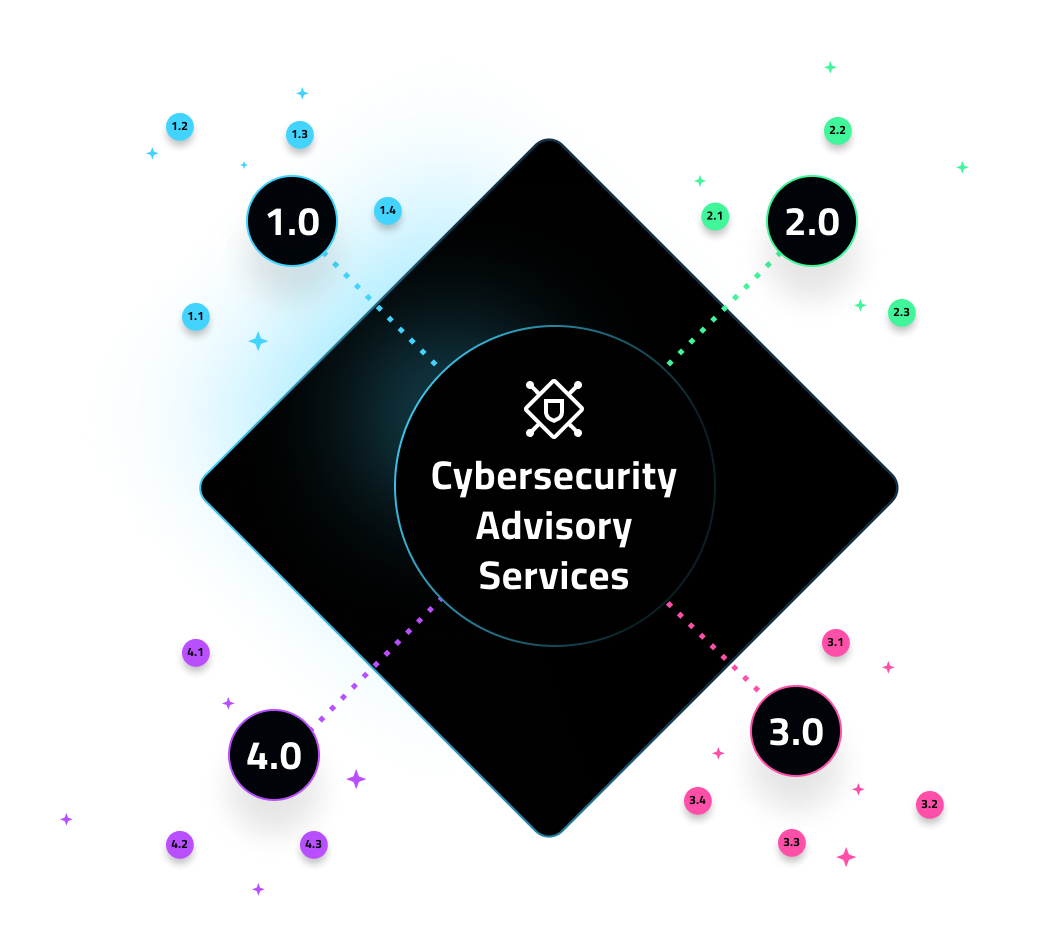
Executive Advisory
Helping leaders make informed security decisions.
Fractional CISO (vCISO)
Executive Security Leadership When It Matters Most
Cybersecurity programs rarely fail because they lack technology. They struggle because organizations lack experienced leadership to align cyber risk with business strategy, governance, and executive decision-making.
Defense Assessments
Understand What Matters Most Before Deciding What to Fix First
Organizations do not need another assessment that produces a longer list of findings. They need to understand where they are exposed, what matters most to the business, and what to do first.
Threat Modeling & Architecture Blueprints
Design Security Into the Architecture Before Risk Becomes a Backlog
Security architecture should be a blueprint, not a backlog. The most effective controls are designed around the threats that matter before systems are deployed.
CTEM-Aligned Exposure & Resilience Advisory
Move Beyond CVSS and Prioritize the Exposures That Threaten the Business
Continuous Threat Exposure Management was never intended to be vulnerability management with a new name. Effective exposure management connects attack paths, business consequence, and remediation.
Cyber Resilience
Helping leaders make informed security decisions.
Incident Response Tabletop Exercises
Make Critical Decisions Before the Crisis Begins
The first time an executive team makes a decision under breach pressure should not be during an actual breach.
Response Program Uplift
Rebuild Incident Response for the Environment You Operate Today
Most incident response plans were written for a different technology environment and a different threat landscape. Refreshing the document is not enough.
Cyber Recovery Retainer
Turn the Worst Week of the Year Into Lasting Security Improvement
Most organizations finish a breach with a forensic report and a remediation backlog. Few convert the incident into durable program maturity.
Offensive Security
Validating defenses against real-world adversaries.
Penetration Testing
Testing Designed to Withstand Technical and Executive Scrutiny
A penetration test should reflect the client’s actual environment and produce findings that hold up in front of engineers, regulators, boards, auditors, and counsel.
Red Team Operations
Find Out Whether You Would Detect a Real Adversary
Penetration testing asks whether a weakness can be exploited. Red teaming asks whether your organization would know an adversary was there.
Purple Team Engagements
Turn Detection Gaps Into Validated Detection Capabilities
Detection improves fastest when offensive and defensive teams test, observe, and build together.
AI Penetration Testing & AI Red Teaming
Test the Attack Surface Traditional Security Programs Were Never Built to Find
AI systems introduce risks across the model, data, pipeline, integrations, and human decision points. Traditional penetration testing was not designed to evaluate them.
Governance & Transformation
Building security programs designed to mature over time.
Security Program Standup & Domain Overhaul
Rebuild Security Domains in Operating Shape, Not PowerPoint Shape
In 90 to 120 days, a security domain should be functioning, governed, measurable, and ready for the client to operate.
Compliance Coach Services
Stay Audit Ready Without Starting Over Every Cycle
Pass the audit. Drift. Scramble. Repeat. Compliance programs should not operate this way.
GRC Platform Advisory & Implementation
Build the Program First. Use the Platform to Scale It.
A GRC platform is not the compliance program. It is the technology that enables the program to operate efficiently.