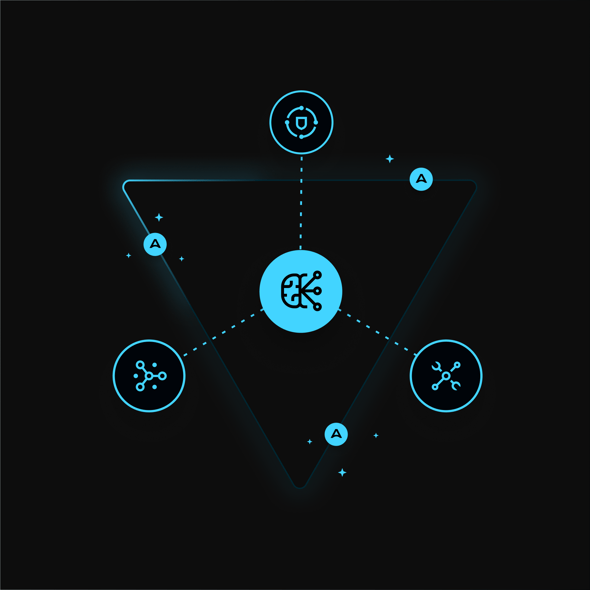
Vulnerability and Exposure Management delivers continuous visibility into exploitable weaknesses across endpoint, infrastructure, cloud platforms, applications, and identity environments. As enterprise attack surfaces expand in complexity and scale, the organizational priority is not the reduction of vulnerability counts alone: it is the systematic reduction of exploitable risk through contextual prioritization, real attack path validation, and remediation governance.
Risk is identified and contextualized based on exploitability and potential business impact, establishing a rigorous baseline of vulnerabilities and misconfigurations across environments.
Exposed assets, misconfigurations, and external attack vectors are identified and analyzed to provide a comprehensive understanding of how the organizational attack surface may increase the likelihood of compromise.
Security teams are supported in transitioning from periodic scanning to continuous, risk-informed exposure programs that identify, prioritize, and reduce exploitable weaknesses while linking findings directly to business impact.
Security defenses are tested through controlled simulation and adversary validation exercises to confirm exploitability, verify detection efficacy, and ensure remediation investments are directed at risks that are both reachable and likely to be targeted.
Structured remediation workflows, executive reporting, and progress tracking are implemented to ensure risk reduction efforts are measurable, sustainable, and aligned to organizational risk tolerance.
Insights and guidance to help you modernize, secure and scale with confidence
What is the difference between vulnerability management and exposure management?
Vulnerability management identifies and tracks security issues; exposure management adds contextual layers. This includes attack paths, asset criticality, and adversary validation to prioritize and reduce the risks that matter most.
How frequently should vulnerability scanning occur?
As enterprise environments change continuously, programs should be designed for ongoing visibility rather than point-in-time snapshots. Continuous exposure management is the recommended standard.