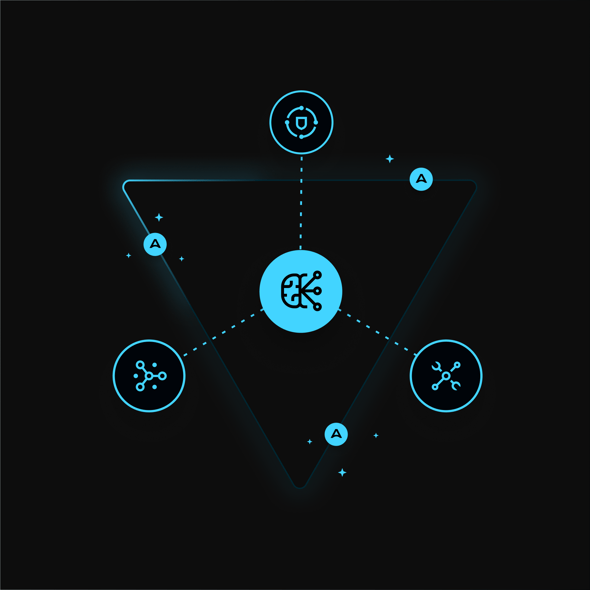
Identity and access management, combined with Zero Trust architecture, secures users, devices, and workloads across hybrid and cloud environments. Arctiq’s Identity Access & Zero Trust services modernize how users, devices, and workloads authenticate and access critical resources: reducing credential-based risk through least-privilege enforcement, adaptive access controls, and identity-driven threat detection.
Modern identity architectures are designed and deployed to strengthen authentication and authorization controls while systematically reducing the identity attack surface across enterprise environments.
Privileged accounts are secured through controlled access workflows and governance policies that address birthright access, RBAC, enforce accountability, and reduce the risk of credential misuse.
Governance practices are implemented to improve entitlement visibility, reduce access sprawl, and support compliance requirements and operational consistency.
Context-aware access policies dynamically adjust authentication requirements based on risk signals, ensuring that access decisions reflect the current risk posture rather than static configuration.
Identity activity is continuously monitored for anomalous behavior, enabling rapid detection and coordinated response to credential misuse, account compromise, and identity-based attacks.
Identity, access controls, and security operations are aligned under a unified Zero Trust framework in which trust is continuously verified and enforced to eliminate implicit trust assumptions across modern hybrid environments.
Insights and guidance to help you modernize, secure and scale with confidence
What is Zero Trust in cybersecurity?
Zero Trust is a security model that continuously verifies the identity and integrity of users and devices before granting access to resources, rather than extending implicit trust based on network location.
Do we need to replace our existing identity platform?
In most cases, no. Many identity security initiatives achieve significant posture improvements by enhancing and integrating existing platforms rather than replacing them.